
Family Reunions and Family Land: Keeping Your Legacy Strong for Future Generations
The family tree keeps growing, so should this conversation.

July has a rhythm of its own—the smell of the grill, family you haven’t seen since last summer, someone reminding everyone where to stand for the family photo, the youngest ones meeting relatives for the first time. It’s reunion season, cookout season, the stretch of summer when three or four generations end up in the same place at the same time.
It’s also the perfect season to talk about something else your family shares: the land.
Whether it’s the home place everyone still calls “Grandma’s house,” a few acres that have been in the family since your great-grandparents’ time, or land nobody’s entirely sure who officially owns anymore, family land carries the same weight as the stories told around the table. It’s history. It’s an opportunity. It’s proof that your family has been building something for generations — and this July, it deserves a place in the conversation too.
Every Reunion Already Starts a Family Tree
Think about what actually happens at most reunions. Someone always ends up playing family historian—correcting a cousin about how everybody’s really related, passing around old photographs, updating the poster-board family tree from a few reunions back to add the new babies and remember the ones who have passed on. Nobody schedules this, it just happens, because reunions are where families naturally piece together who belongs to whom, going back generations.
That work matters more than most people realize. At the Center for Heirs’ Property (CHP), an accurate family tree isn’t just something nice to have for the family archive, it’s often the starting point for protecting land itself. When property has passed down informally across generations, without a will or a clear title, every family member with a legal interest in that land has to be identified before the title can ever be resolved. The names, dates, and relationships your family is already piecing together over paper plates and old photo albums are, in many cases, exactly the information needed to protect what you all share.

So this year, while everyone’s gathered and the branches of the family tree are already coming together, take it one step further. Ask the bigger question out loud: what happens to our land? Who’s responsible for it? Does everyone in this yard even know it exists? A five-minute conversation at a reunion can be the first step toward protecting a piece of your family’s history for good.
Learn more about CHP’s role in heirs’ property and estate planning.
More Than Property: History, Opportunity, and Strength
At CHP, we talk with families across South Carolina and East Texas every day who are sitting on more than they realize. Family land is rarely just the yard where the reunion happens to be, it’s usually all three of these things at once:
History — the land your ancestors worked, built on, and protected, often against real odds, so that it could still belong to your family today.
Opportunity — land that, properly managed, can be a genuine source of income and growth, whether that’s through sustainable forestry, farming, or simply having a clear title that opens the door to a mortgage, a home repair grant, or a small business.
Community strength — the one place that still holds an extended family together across cities and state lines, no matter how far everyone has moved.
That’s the story CHP wants families to see first, before the legal complexity. The starting point is always your land’s value to your family, not the paperwork. As Brianna Jackson, Esq., Director of Legal Services at CHP, explains:
“Establishing the family tree is pivotal for heirs’ property resolution because it sets the framework of identifying the owners of the property and invites collaboration for those owners to discuss future land use opportunities and succession planning after title is resolved to secure the land for future generations. In my experience, I can appreciate the complexities of building the family tree, and it’s a privilege to be able to witness the excitement from client’s learning about their family history and legacy. The act of establishing the family tree is preservation. In our work, we want to emphasis that our legacy and land are worth protecting and preserving”
— Brianna Jackson, Director of Legal Services, Center for Heirs’ Property
Starting the Conversation This Reunion Season
Pick the right moment, not a big one. It doesn’t need its own agenda item. A lull after the meal, or the slow wind-down while everyone’s packing up leftovers, is often the easiest time to bring it up.
Start with a story, not a spreadsheet. Ask an elder to tell the story of how the family came to have the land in the first place. That conversation almost always leads naturally into who’s responsible for it now.
Write down what nobody’s sure about. Who holds the deed. Whether there’s a will. Who’s been paying the taxes. It doesn’t have to be solved on the spot. It just needs to be written down, so the question doesn’t disappear again until next year’s reunion.

Once your family has opened the door, the next step is learning what heirs’ property and estate planning actually mean for land like yours. CHP has spent over 20 years helping families understand exactly that.
If that conversation turns up more questions than answers, you don’t have to sit with them. CHP offers consultations with an attorney to help begin the dialogue — Reach out and get on the calendar.
Keep the Momentum Going
None of this has to be figured out alone, and it definitely doesn’t have to be figured out in one afternoon. If your family took even one step this reunion season, started the conversation, found an old deed, wrote down a question nobody could answer, CHP is here for what comes next.
A reunion conversation is just the start. CHP offers a few easy ways to keep it moving:
Download the Pathway to Clarity Series — three free guides covering family land conversations, managing forestland, and getting legal clarity.
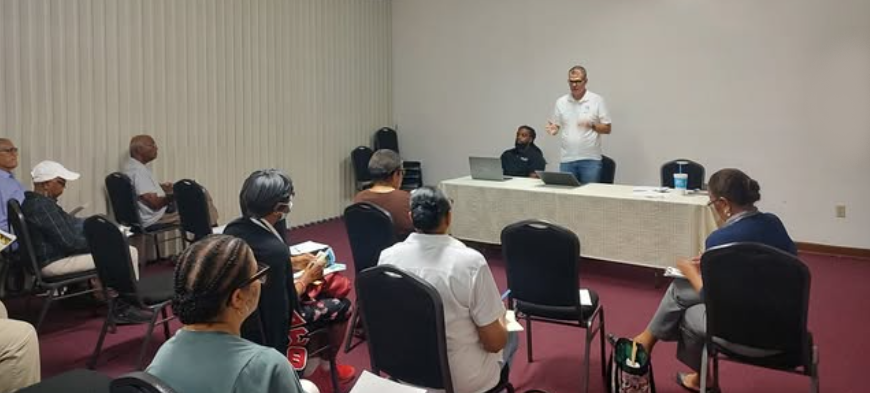
Join a seminar or wills clinic — CHP hosts free events throughout the year, from estate planning seminars to wills clinics, in person and online. Find one near you!
July will circle back around next year, and so will the reunion. The only question worth asking is whether your family’s land is a little more protected than it was this time. Start the conversation this summer. Your legacy, and the generations still to come, are worth it!
Reach out directly. If your family’s ready for more specific guidance, CHP’s team is here to help. Contact Us