When the Field Comes Together: Reflections from the 2026 Toolkits Gathering
North Charleston, SC | April 22–24, 2026
Something happens when people who are doing the hard, daily work of protecting family land finally get to be in the same room together. The conversations deepen. The energy shifts. And something that can be difficult to manufacture in a Zoom meeting — real trust, real momentum — begins to move through the space.
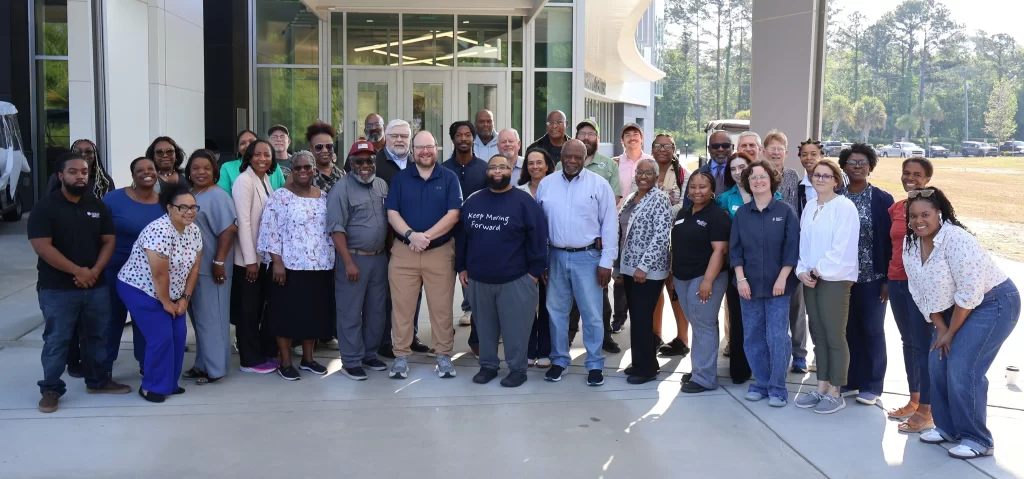
That is exactly what unfolded at the 2026 Toolkits Gathering, hosted by the Center for Heirs’ Property’s® (CHP’s) Out of State Partnership Program (OSP) in North Charleston, South Carolina. Over two full days, legal services attorneys, forestry and land use practitioners, outreach specialists, and community engagement professionals from throughout the South and Appalachia gathered at the South Carolina Aeronautical Training Center at Trident Technical College — and the conversations about heirs’ property they had will echo far beyond the room where they happened.
The 2026 Toolkits Gathering brought together practitioners representing a cross-section of organizations at the forefront of this work:
- Legal Services Alabama
- Limited Resource Landowner Education and Assistance Network (LRLEAN)
- Mississippi Center for Justice
- National Parks Conservation Association
- Land Literacy and Legacy
- LiKEN (Appalachian Heirs Property Network and Forest Livelihoods)
- East Texas Heirs’ Property Initiative
- Mississippi Association of Cooperatives
- Winston County Self Help Cooperative
- Keeping It In the Family Program (University of Arkansas Pine Bluff)
- American Forestry Foundation
- The Conservation Fund
The gathering was designed with one clear purpose: to send practitioners home with tools they could immediately put to work in their communities — not just ideas, but real, actionable strategies built for the realities of the field.
A Gathering Built With Intention
What made this gathering different started long before anyone arrived in Charleston. In the months leading up to the event, CHP convened an advisory committee made up of representatives from its eight implementation partners — legal professionals, forestry experts, land use specialists, and outreach practitioners spanning six states.
These are the people on the ground, doing the work every day. So CHP did something straightforward: it asked them what the field actually needed to talk about. The topics that shaped the agenda came from the communities where this work lives.
Danyelle O’Hara, Chief Partnerships Officer at CHP and one of the gathering’s lead organizers, describes the design philosophy this way:
“We intentionally designed the Toolkits Gathering as a space for peer learning and exchange. We called it the Toolkits Gathering because we wanted partners to leave with concrete tools to use in their home communities. For the most part, our partners were the experts and shared with one another approaches they are using in their home communities. In almost all cases, the sessions were structured as conversations, where partners talked, connected with one another, and generated new ideas.”
— Danyelle O’Hara, CHP, co-organizer
The program was structured across three distinct tracks — legal, forestry and land use, and outreach and community engagement — and there was a clear reason for weaving all three together in a shared space. Heirs’ property is not a problem that can be solved from one angle. It demands legal clarity, land stewardship, and community trust — all at once, all in relationship with each other. The gathering was designed to honor that complexity, and to give practitioners a rare chance to see how their individual work is part of a much larger, deeply connected whole.
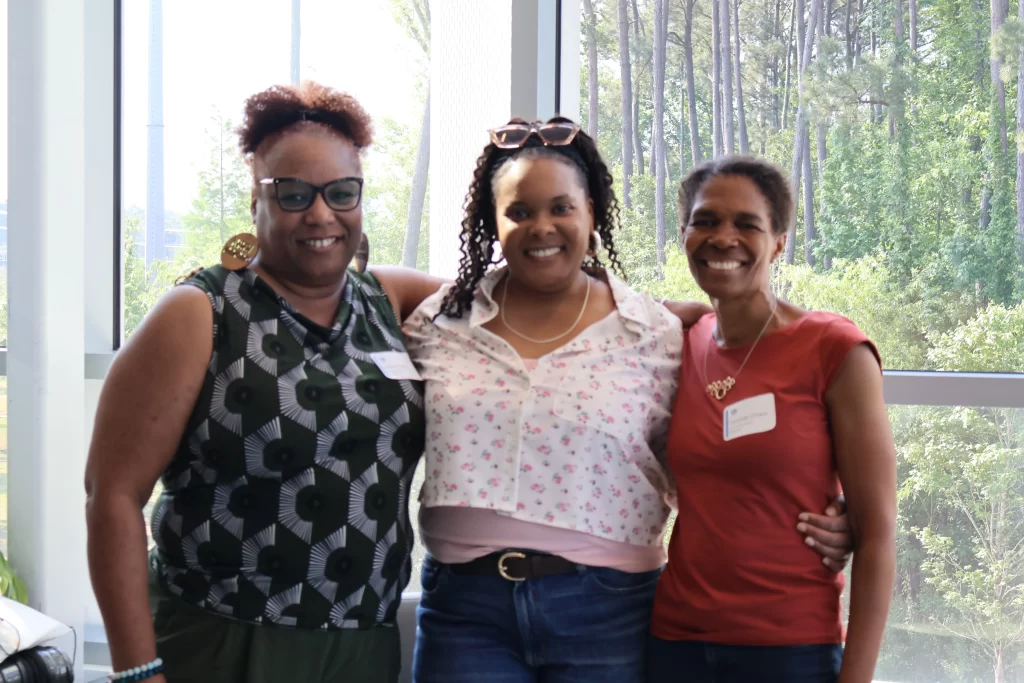
“When we designed the toolkits gathering with our partners at the center, we wanted it to feel holistic. We made room for the important history of Charleston, but also for movement, co-learning, co-leadership, and building real relationships. I saw people lean in, ask tough questions, share solutions, and connect—and I look forward to watering that garden.”
— Alexa Stephens, CHP, co-organizer
Beyond Awareness: What It Really Means to Protect Family Land
One of the through-lines of the 2026 gathering was a deliberate shift in conversation from raising awareness about heirs’ property to equipping families to actively use, protect, and build value from their land.
That shift is rooted in CHP’s own organizational evolution. When CHP launched more than 20 years ago as a legal aid organization, the focus was clear: help families clear titles. But within the first few years, something became apparent: legal clarity alone wasn’t enough.
“We can help people clear title,” Danyelle reflects, “but we had to give people something to do with their land, so it’s an asset, not a liability. That’s what will motivate them to protect it for generations to come.”
That insight shaped a robust Day 1 agenda that moved fluidly between topics: from Property Ownership 101 and federal audit preparedness, to alternative land uses and community ownership models, to the extraordinary possibility of civil rights site designation as a land use option for heirs’ property families. The message throughout was consistent — land is potential, and families deserve to understand the full range of what that potential looks like.
“I really valued being able to spend time with dedicated people working on the same issues in different places. Being able to talk to foresters in Arkansas and Mississippi who are working in completely different ecosystems, but who deal with similar issues we do, whether it’s collapsing markets, invasive species, issues with bureaucracies, or changes (or interfamilial conflict) in what people want from their woods was illuminating and inspiring. All in all, the LiKEN contingent left North Charleston excited and well fed, with a feeling of solidarity and lots of good threads to follow.”
— Steve Kruger, LiKEN, participant
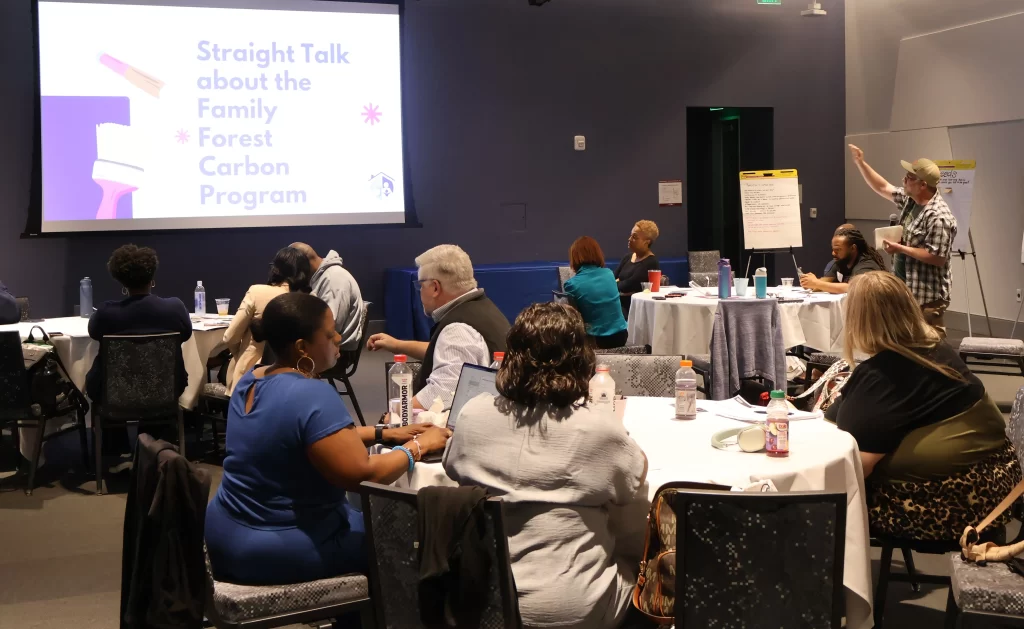
The Power of Plain Language
One of the most candid moments of the gathering came during the session on Heirs’ Property Outreach in Plain Language — a session suggested by James Rich of Legal Services Alabama — and it sparked a conversation that resonated across the room.
Danyelle put it plainly: It is a discipline to speak clearly and accessibly. Too often, practitioners and organizations lead with the complexity of the issue rather than the humanity of the families at the center of it.
Trust, she emphasizes, is the foundation of everything. And trust is built not just through what organizations communicate but through what they actually do. For families who have often encountered institutions that complicated rather than clarified their situation, plain language isn’t just a communication strategy. It’s an act of respect.
“As workers in the heirs property field, we habitually tend to use complicated and technical language. This can have the negative effect of putting up barriers and driving away the very families we are trying to reach. Effective outreach begins with meeting people where they are, and communicating in a way they can understand and relate to. We use plain language in our outreach because we want to make the heirs property process more accessible, and less intimidating”
— Jimmy Rich, LSA, originator of “Heirs’ Property Outreach in Plain Language”
A New Conversation About Gen Z
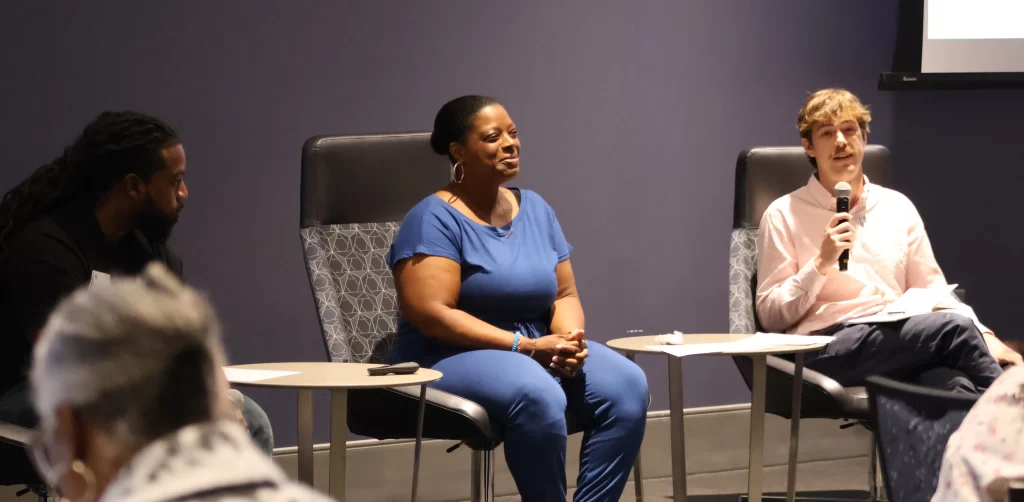
Perhaps the most energizing session of the gathering happened at the very end: Helping Gen Z Avoid Heirs’ Property, moderated by Sharmaine Tyra (LRLEAN) with panelists Kevin Slovinsky of LiKEN, T’arie Todman of WCSHC and Markus Reneau of CHP.
The room, which had been engaged throughout the gathering, came alive.
This session didn’t just acknowledge that young people matter in the heirs’ property conversation, it dug into the nuance. Many Gen Z adults don’t own land yet. But heirs’ property doesn’t wait for ownership, it takes root in families long before the next generation realizes they have a stake in it. Some are already living inside a heirs’ property story, as the children and grandchildren of families navigating heirs’ property challenges. And that creates both a challenge and an opportunity: how do you bring people into a conversation about something they haven’t inherited yet, but that is already shaping their family’s future?
CHP has been sitting with that question and answering it from the inside out. Intentionally, the organization has built a team that includes staff who are Gen Z, ensuring that the voices shaping this work reflect the generation it’s trying to reach. The gathering explored specific methods and messages that practitioners can use to help young people begin talking with their families now, before a property crisis occurs.
“Helping Gen Z Avoid Heirs’ Property was an important session because the next generation deserves the knowledge and tools to protect the land, homes, and legacies their families worked hard to build. Too often, conversations about heirs’ property happen only after families are already facing challenges. I hoped participants walked away understanding that education, communication, and early planning can help prevent future land loss and create stronger pathways for generational wealth and stewardship. What stood out most to me was seeing people want to educate young people and get them engaged and asking thoughtful questions about how to help them. ”
— Sharmaine Tyra, LR LEAN, originator and moderator of “Helping Gen Z Avoid Heirs’ Property”
Three pillars emerged from the session as a framework for this work: leveraging a practical approach to family land and legacy conversations, actively listening and reflecting what Gen Z voices are sharing, and recognizing that shifting the culture of this field will require that kind of deep, ongoing responsiveness.
The Energy in the Room
Before the sessions began, attendees gathered for a Gullah cultural tour of downtown Charleston, a grounding experience that set the tone for everything that followed. On Thursday, the gentle yoga break led by a local Yoga Instructor and heirs’ property landowner, helped reset the room’s energy with renewed focus and shifted the atmosphere from heady to grounded. It helped keep everyone present and engaged. Dinner gave way to a pickleball game. And built into the day between sessions were moments intentionally designed for dialogue, networking, and connection.
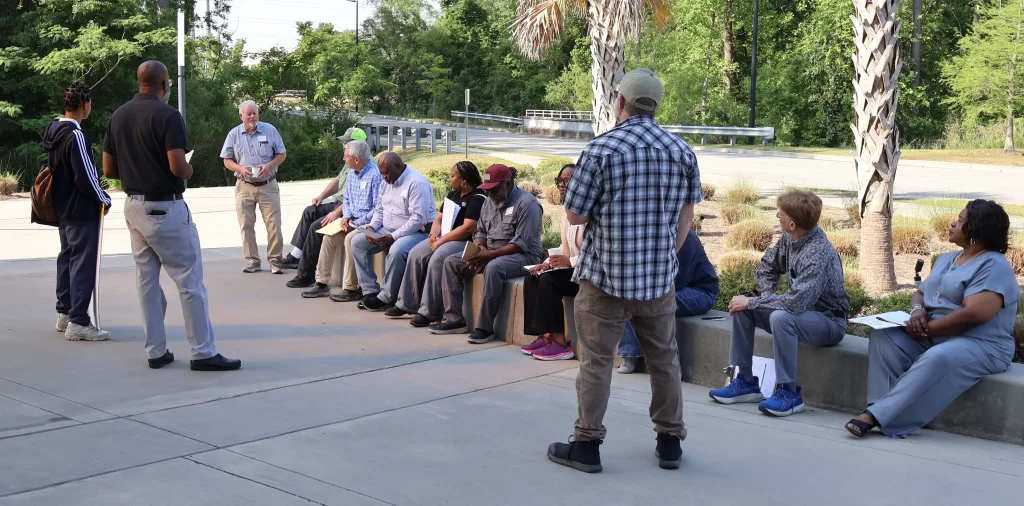
By the time the closing session arrived on Friday morning, the room had become something rarer than a gathering of practitioners — a collection of collaborators with a shared sense of urgency and a clearer sense of direction.
“People were lingering,” Danyelle recalls with a smile. “Gen Z was our last panel, and people were super engaged all the way to the end.”
That energy, hard to manufacture and impossible to script, was the product of intention. CHP and its implementation partners designed this gathering to be dimensional: content that informed, program design that connected, and space that allowed practitioners to be both learners and contributors.
“The CHP Partnership Toolkit Gathering was a phenomenal event. It provided a meaningful opportunity for legal and land-use partners to connect, exchange best practices, share lessons learned, and receive support from colleagues serving heirs’ property landowners. The sessions were highly informative and offered a real-time view of the issues and barriers encountered in this work.
The gathering also allowed me to unplug, be fully present in the moment, recharge, and become reignited in my commitment to this important work. I am deeply thankful for CHP’s leadership and vision. The event reflected a high level of thoughtfulness and intentionality in its planning, ultimately adding significant value for all attendees within this shared space.”
— Andrea Barnes, MCJ, participant, and “Property Ownership 101” panelist
Twenty Years In — And Just Getting Started
CHP has been in the heirs’ property space for more than two decades. The urgency of the issue has never changed. For the families losing land, it has always been urgent. What has changed, especially in the last four to five years, is the attention.
More organizations are in this space. More practitioners are asking the right questions. More policymakers are starting to listen. And that growth makes collaboration — real, structured, nationally coordinated collaboration — not just helpful, but essential.
“The Toolkits Gathering reminded me that none of us can solve heirs’ property challenges alone. Families are trying to navigate systems that are not always designed with them in mind, and that reality requires more than legal solutions—it requires partnership, trust, and a willingness to learn from one another. What encouraged me most was seeing practitioners from across the South and Appalachia openly share their experiences, their successes, and even their challenges so that together we can help more families protect what matters most—the roof over their heads and the land under their feet—for generations to come.”
— Jennie Stephens, Chief Executive Officer, Center for Heirs’ Property®
The 2026 Toolkits Gathering was, in many ways, a proof of concept for what that coordination can look like. CHP has always been about connecting people to support work that matters. The Toolkits Gathering is simply that mission at scale and the practitioners who left North Charleston last April didn’t just leave with tools. They left as part of a network that is increasingly ready to act together.
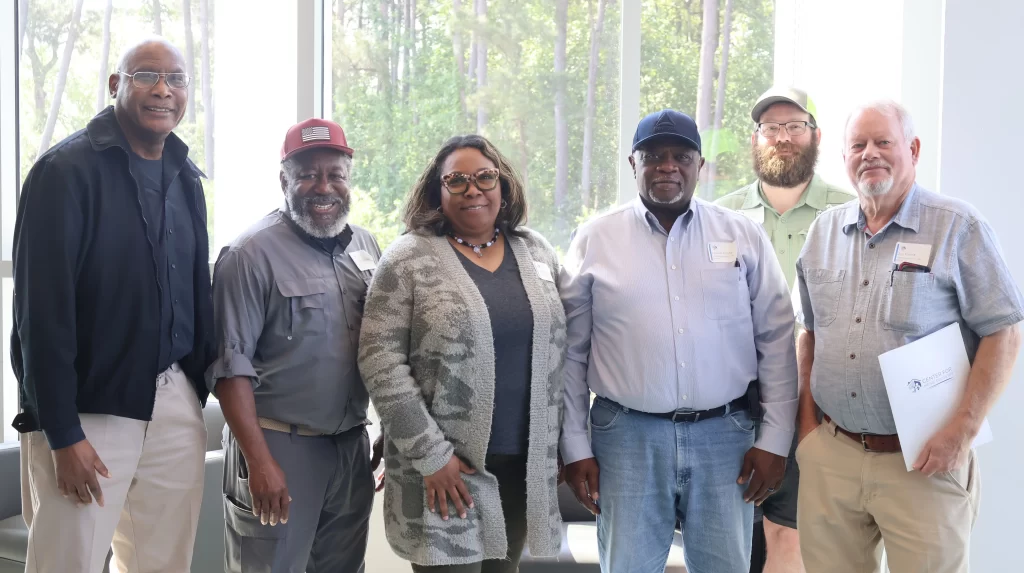
What’s Next
The work continues. Practitioners are already applying what they learned — in their forestry programs, in their community outreach, and in their conversations with young people about the land their families stand to inherit. CHP’s virtual convenings, held every other month, will keep the network connected. And the momentum from this gathering is already building toward something larger: a national alliance capable of bringing even more organizations into the shared work of protecting family land for generations to come.
To learn more about the Center for Heirs’ Property® and how to connect with this network, visit www.heirsproperty.org.